
From Data to Diagnosis

Arrow helps enhance Revela’s endometriosis detection platform
Newcastle upon Tyne

Revela Health

HealthcareData and AI

Their Challenge

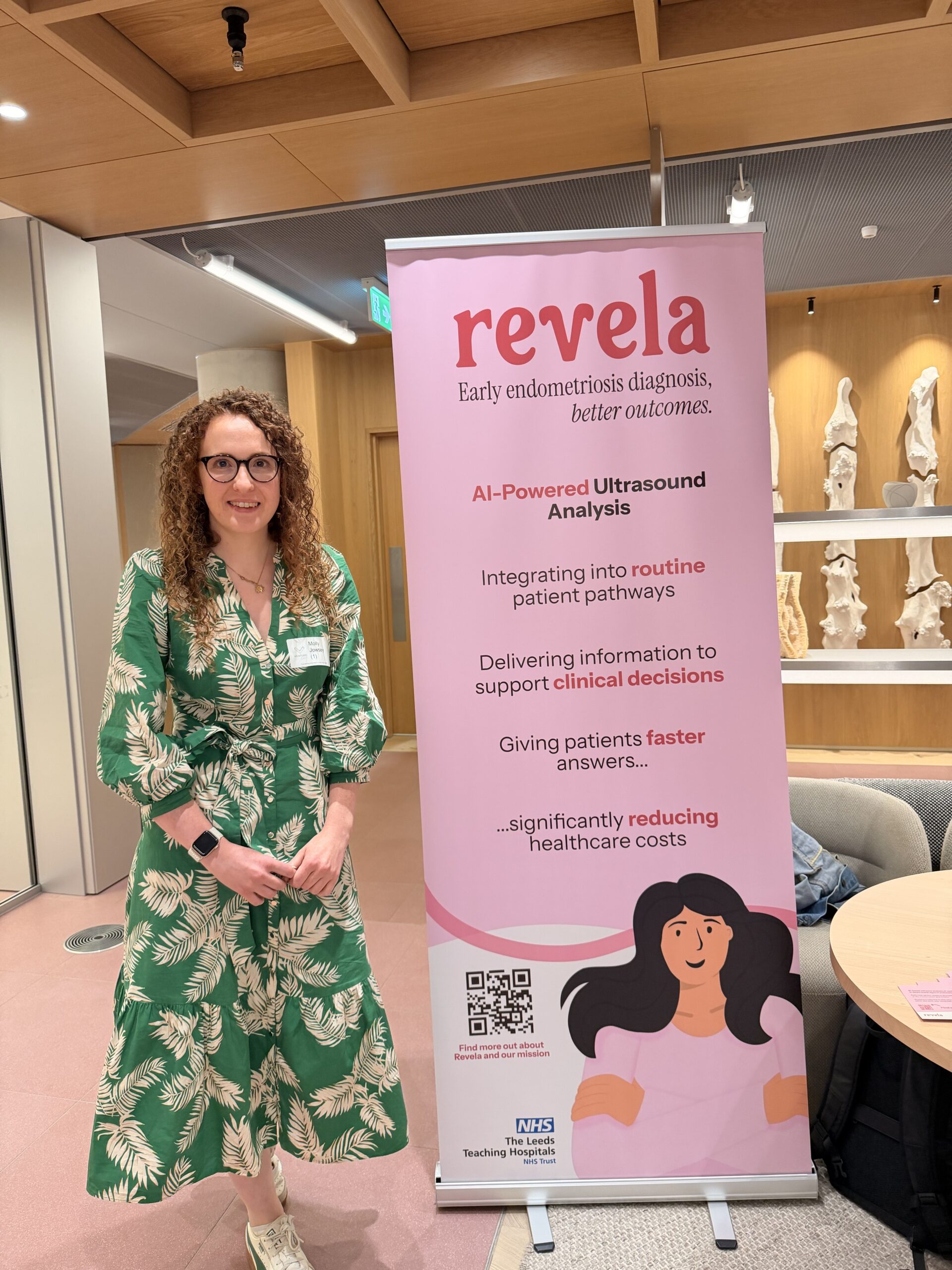
Revela Health is developing software to enable the fast, non-invasive detection of endometriosis, a painful condition affecting millions of women, which often takes many years to diagnose.

The company was founded by Molly Jowsey and Tom Willshare, who both have a track record in medical diagnostics and an interest in how data can be used to enhance diagnostic procedures and outcomes. Having seen the significant challenges faced by a family member in receiving an endometriosis diagnosis, Molly realised this was an area in which they could use data to make a real difference.

Their research established that, in most cases, patients with pelvic pain will be given an ultrasound scan, but typically this will look for signs of cancer, fibroids and cysts, often leaving endometriosis undiagnosed and leading to many women going on to have more invasive procedures to diagnose the condition.

However, the vast amount of recorded data available from ultrasound scans offered Revela the opportunity to develop machine learning algorithms capable of significantly speeding up the diagnostic process and helping the millions of women searching for answers for their pelvic pain.

The support we’ve had from Durham University has been brilliant and we’re continuing to see the positive impacts as we move forward. Their work has helped us to be really clear and specific about the type of data we need from our hospital partners. It’s also helping us with our applications for funding.
Molly Jowsey

Co-founder, Revela Health

Arrow Analyses the Business Challenge

The Revela software automatically analyses ultrasound images taken early in the diagnostic pathway and creates a report for clinicians highlighting signs of endometriosis for clinical review. Having initially developed machine learning models to analyse the ultrasound scans, Revela needed advice on best practices in software architecture to ensure that the software they were building was suitable for use in a medical setting.

Through Arrow, they were introduced to Professor Noura Al Moubayed from Durham University, an expert in machine learning. Together they designed a project that would focus on building the architecture and mitigating biases in machine learning, to ensure that they had an appropriate algorithm to deliver outcomes that would be clinically useful for doctors.

The Arrow team at Durham University undertook a thorough review of the most recent research and literature on endometriosis diagnostics and ultrasound scans, creating a best practice guide on achieving the key outcomes in creating a clinical support tool.


The next step in the process is testing and training the model on a much larger dataset. Assisted by their learning from the Arrow project, Revela are now working with partners across the NHS, as well as in Portugal, to access the data that will help them to revolutionise the diagnosis and treatment planning of endometriosis.

Hear from our university partners

Endometriosis affects around 1 in 10 women, yet receiving a diagnosis can take over 8 years. Earlier diagnosis has the potential to improve outcomes significantly. Our collaboration with Revela Health focused on developing AI approaches that are clinically relevant, robust and minimise bias to support faster and more reliable diagnosis. The project has also developed into a longer-term collaboration with shared interests in translating AI research into practical healthcare applications.
Professor Noura Al Moubayed

Professor of Machine Learning and AI, Durham University

Start the next stage of your success

Contact us today and let’s get started