
Lab Grown Leather

Access to bioimaging facilities and expertise provides insights into cultivated leather structure
Newcastle upon Tyne

Lab Grown Leather

BiotechSustainabilityFacilitiesImaging

Their Challenge

Lab-Grown Leather Ltd (LGL) is a Newcastle-based bio-tech company developing cultivated leather as a sustainable alternative. Lab-grown leather can help reduce the environmental impact of traditional leather production by lowering reliance on livestock farming, which is associated with significant greenhouse gas emissions, land use and water consumption.

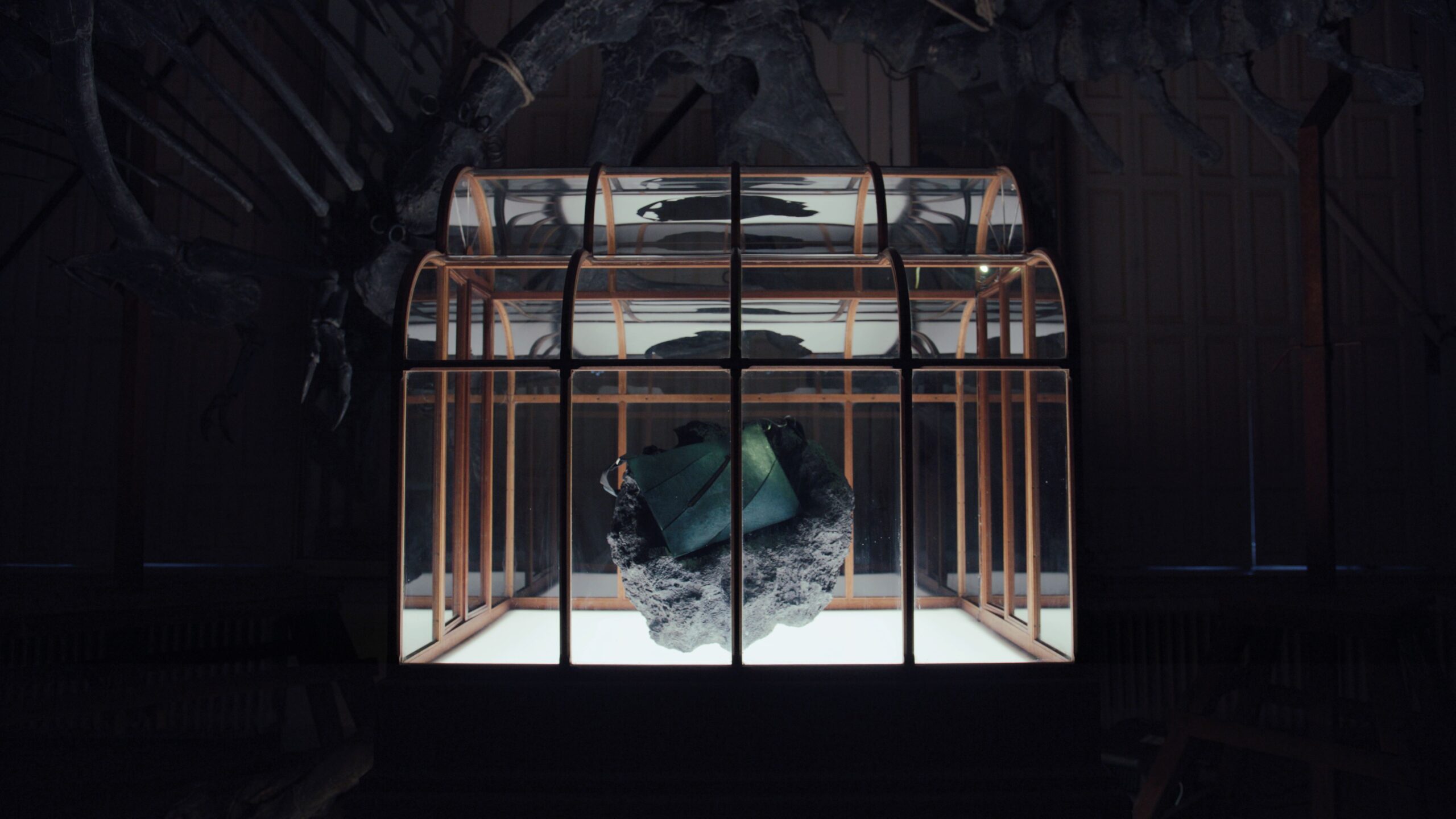
Their work focuses on enhancing the structure and durability of cultivated leather by optimising collagen production during the creation process. They have even reproduced durable and strong T-Rex leather, created in their lab from reconstructed fossilised dinosaur collagen.

LGL sought to better understand how collagen and other extracellular matrix (ECM) components form and organise within their leather cultivation. Replicating the strength and flexibility of traditional leather requires precise control over collagen structure, something that is difficult to achieve in laboratory conditions.

Understanding and controlling this structure is an important part of developing materials with the properties needed for practical future use. A key challenge was therefore visualising and comparing collagen organisation under different conditions to identify which methods best support high-quality leather formation.


Arrow is an invaluable way to connect companies with regional academic expertise. The support allowed us to discover and leverage the specialist resources at Durham University’s Bioimaging facility, giving us practical tools and resources we can access to support ongoing R&D work.
Dr Emily Telford

Head of R&D, Lab-Grown Leather Ltd

Arrow identifies the right support:

The Arrow team at Durham University connected LGL with specialist bioimaging expertise and access to advanced microscopy facilities at Durham University. Dr. Liv Kent, Arrow Senior Innovation Associate, led and delivered the project, with support from Dr. Tim Hawkins, Head of the core Bioimaging facility in the Department of Biosciences at Durham University whose expertise in bioimaging and microscopy helped guide the work. Liv developed and adapted imaging approaches to investigate LGL’s collagen-rich samples, providing the technical expertise and hands-on support needed to explore the materials in greater detail.

Working together for real results - Arrow’s solution for success

The Arrow project focused on developing reliable methods to visualise LGL’s collagen-rich materials. Using immunofluorescence – a powerful laboratory imaging technique used to visualise the presence, location, and distribution of specific proteins or molecules within tissues – and advanced imaging techniques, the team successfully demonstrated that collagen organisation could be clearly observed in tissue constructs of varying thickness, allowing samples to be compared.

As a result of the work, LGL gained valuable insight into how processing steps influence the structure of the leather as it is grown in the lab.

LGL now has a clearer understanding of how its materials can be imaged and compared, providing an approach to help guide the cultivation of leather at an industrial scale.

Hear from our university partners

It was exciting to apply advanced imaging to such an innovative material. By developing an approach to visualise collagen within the samples, we were able to see how different processing conditions could influence the structure and provide insights to support Lab-Grown Leather’s continued material development
Dr Liv Kent

Senior Innovation Associate, Durham University

Start the next stage of your success

Contact us today and let’s get started